
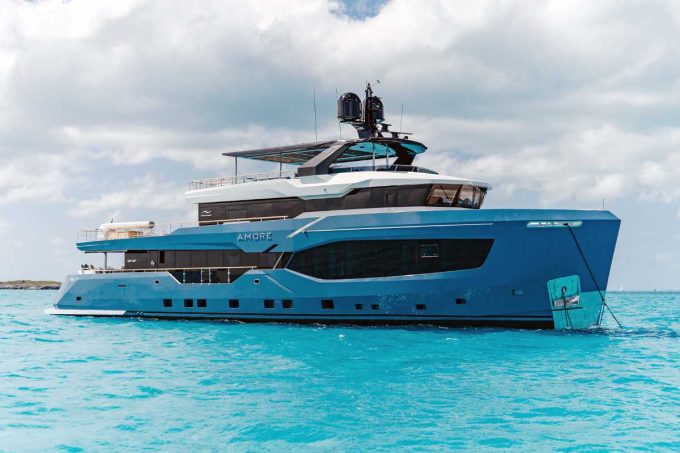
If you spend time on the water or you’re a member of the Royal Perth Yacht Club, you know that a boat in Western Australia lives a double life.
On one hand, there is nothing like a sunset cruise on the Swan River or a spontaneous run out to Rotto when the water is like glass just because you can.
On the other hand, our environment can sometimes feel like a giant sanding machine powered by salt and sun.
Our Perth sun is brutal, and when you combine the UV radiation and heat with the high salinity of our coastal waters, this is where the reality of yacht painting becomes unavoidable.
Your yacht’s finish isn’t just an aesthetic choice. It needs to be a defensive shield.
Now a lot of boat owners wait until they need a paint. They wait until they can see visible oxidation or chalking.
By then the salt has migrated into the substrate, and what should have been a refinishing job turns into a full scale structural rescue mission.
The reality is that yacht painting is about 90% chemistry and 10% artistry. If you get the chemistry wrong in a climate like ours, the artistry won’t stay on the boat for more than a single season.
Why the WA Coast is a Finish Killer
We have to talk about Fremantle. While that breeze is a godsend for sailors, it carries a heavy load of salt spray and fine silica sand.
This means a constant abrasive action against your topsides. If the paint system on your yacht doesn’t have the right hardness to flexibility ratio that means it will end up cracked, dull or scuffed within a few months.
The Myth of the “Quick Respray”
Some valuable advice I can give you is that if someone quotes you a yacht painting job and says they can have it done in a week, you should run the other way. A professional finish requires an extensive level of preparation.
First the yacht must be washed and degreased, but the real work starts in the fairing. Even a brand new composite hull has microscopic imperfections.
These imperfections, if not perfected, will change the entire outcome of the paint job, and be the difference between a glass looking finish and a rough job.
If you just spray high gloss over an unprepared surface, the paint will actually highlight every single imperfection. It’s like putting a spotlight on a dented car.
It’s worth mentioning that the transition from fairing compound to primer is where most DIY or “budget” jobs fail. If the chemical compatibility isn’t perfect, you get delamination.
You may not see it at first but the tension from that first heavy swell of Rottnest will cause that fresh paint to flake off in sheets.
Understanding the Topcoat
High end yacht painting normally means two component (2K) linear polyester polyurethanes. These aren’t your hardware store enamels. These are high solids coatings that create a cross linked molecular bond.
And you may be wondering what that means? And why it matters for your boat? Its because these coatings are specially designed to be chemically resistant.
So when a seagull decides your deck is a target or when someone spills a bit of diesel during a refuel at the marina, a high quality 2K finish will shrug it off.
The downside is that these paints are incredibly difficult to apply. They are sensitive to humid conditions and they need special equipment for application.
The environment which you paint it is eve more important, any single spec of dust of lint can ruin the entire look of a forty foot hull.
The Hidden Danger
While everyone focuses on the topsides because that’s what people see at the dock. But sometimes people forget a lot happens below the water. If you’ve ever seen those small blisters on a hull you’re looking at osmosis.
Despite what some people may think, fiberglass is not entirely waterproof. Over time water molecules can seep through the gelcoat and react with the resins inside the laminate. This creates pressure, which creates blisters.
If you want to repaint your yacht this would be the best time to inspect your hull for these types of issues. The longer you leave them the worse they get.
A proper yacht painting service includes stripping back the old layers to see what’s actually happening with the hull.
If moisture is found underneath it needs to be dealt with immediately. The hull needs to dry out for days or even weeks before it can be coated on top. This epoxy barrier is what actually keeps the ocean out of your boat’s “bones.”
Choosing Your Colour
This topic is specifically more relevant to Perth boat owners. I know everyone loves a dark navy or a sleek black hull. They look incredible.
The downside is that darker colours are extremely high maintenance.
A dark hull colour absorbs heat. On a Perth summer day the surface temperature of a black hull can exceed 80°C. This doesn’t just make the boat hot to touch, it puts immense stress on the fairing and the core materials of the boat.
This can also lead to print through where you can see the pattern of the fibre glass through the paint.
However, if you have your heart set on a darker colour it can certainly be done, and again it looks amazing so I understand why you would want it. Just be prepared for higher.
For most WA boaties, we often suggest lighter metallic greys or classic off whites. They hide the salt better, they stay cooler and they hold their gloss significantly longer under our UV index.
What to Expect When You Work With Us
When you bring a boat to Wet Touches, we don’t start with a spray gun. We start with a clipboard and a moisture meter.
We want to understand how you use the boat. Are you a weekend cruiser? A competitive racer looking for a low-friction “speed finish”? Or are you planning to head up North to the Kimberley where the conditions are even more extreme?
When you work with us you can expect a clear roadmap of what’s ahead. We break down the stages from stripping and fairing to the final clear coat.
Theres no hidden layers and costs. We believe in transparency because we know that once that boat hits the water, our reputation is sailing right along with you.
The Perth coastline is beautiful but demanding. Your boat deserves a finish that can withstand the harsh conditions.